
The Evolution of Street Art: From Vandalism to High Art
How graffiti broke boundaries, challenged norms, and found its place in the world of contemporary fine art.
Anúncios
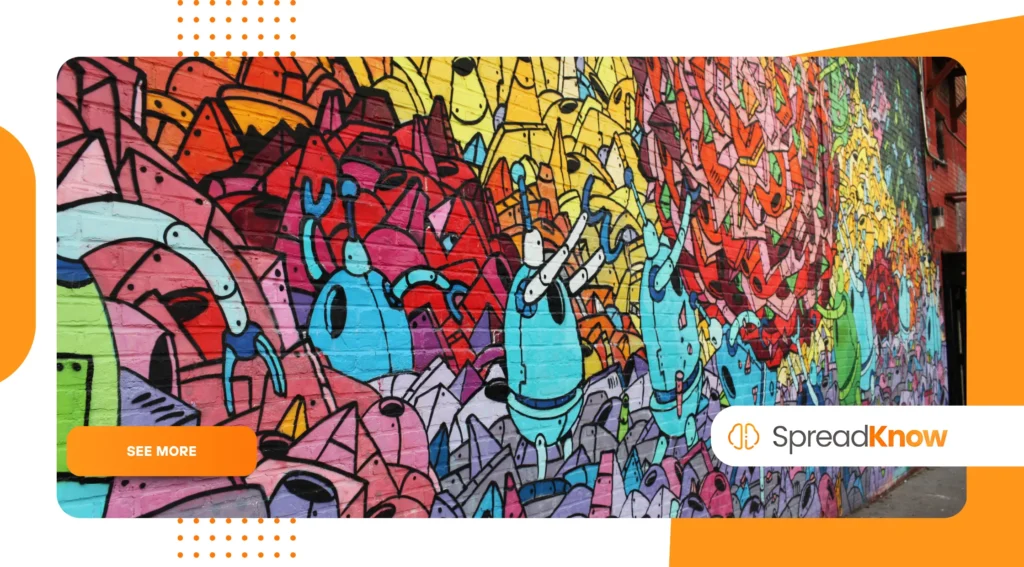
The Evolution of Street Art didn’t start with a curator’s approval. It was born in the chaos of the streets—raw, unsanctioned, and often misunderstood. Spray cans became the voice of the invisible.
In the late 20th century, graffiti was branded a public nuisance. Yet beneath the surface, it spoke of marginalized voices, neighborhood pride, and rebellious creativity.
How did this unfiltered form of expression transition from “vandalism” to auction-worthy art?
Let’s unravel this cultural shift and understand how concrete became canvas, and resistance became recognition.
Anúncios
Summary:
In this in-depth exploration, you’ll discover the evolution of street art, from its defiant roots to its sophisticated presence in galleries and digital spaces.
We analyze how social, cultural, and economic forces transformed public walls into celebrated canvases. Expect real data, smart examples, persuasive analysis, and a truly human voice.
From Margins to Messages: The Birth of a Movement
The early 1970s in New York were marked by racial tension, youth unemployment, and urban decay.
For many, graffiti was the only platform to assert their identity. Subway trains, rooftops, and alleyways turned into raw galleries.
Writers like TAKI 183 and Lady Pink didn’t ask for permission. Their tags were declarations, not decorations.
It was less about fame and more about presence—a visual reminder that they existed in a system designed to overlook them.
Mainstream society, however, labeled it all as destruction. City councils passed anti-graffiti laws, invested in clean-up teams, and increased surveillance. Yet, the movement thrived underground.
By the 1980s, styles became more sophisticated, blending calligraphy, political commentary, and symbolism. Artists weren’t just tagging—they were telling stories.
+ What Is Slow Art and Why It’s Trending on Social Media
When the Streets Met the Studios
As the visual language matured, so did its reach. Jean-Michel Basquiat’s transition from the street pseudonym SAMO to international fame marked a watershed moment.
His art—deeply influenced by graffiti—fetched over $110 million in 2017 at a Sotheby’s auction.
This wasn’t a one-off. Keith Haring, known for his subway chalk drawings, was another pioneer who blurred boundaries between graffiti and fine art.
Their work didn’t seek to be respectable; it demanded to be taken seriously.
The real shift began when galleries, auction houses, and institutions started showcasing what was once considered visual noise. Suddenly, collectors saw social value—and market potential.
But this recognition came with tension. Many purists questioned whether institutional validation diluted street art’s raw essence. Could art born from defiance coexist with luxury auction houses?
Still, artists like Banksy thrived in this liminal space. His 2018 self-destructing piece at Sotheby’s became a viral moment—not just for shock value, but as a critique of the very system embracing him.
+ The Benefits of Having a Hobby: Why You Should Start One Today
The City as Canvas: Urban Development and Cultural Capital

By the 2010s, cities like Berlin, São Paulo, and Melbourne had embraced large-scale murals as part of urban revitalization projects.
What was once criminalized became a celebrated tourist attraction.
In fact, a 2023 report from the Urban Aesthetics Journal revealed that neighborhoods with curated street art saw an average 22% rise in local commerce over five years.
Street art brought foot traffic, social media buzz, and cultural vibrancy.
Local governments began funding public art initiatives. Street art festivals flourished, and artists were commissioned for city beautification. However, this raised critical questions about authenticity and control.
Is it still street art when curated by municipalities? Can rebellion be government-approved?
The debate is ongoing, but one thing is clear: the public now views murals not just as backdrops but as symbols of community identity.
Take São Paulo, for instance. In 2017, after a controversial anti-graffiti campaign, public outcry led to the reinstatement of large-scale muralism.
One year later, over 500 artists were invited to legally paint in strategic areas.
+ The Role of the Artist as a Cultural Historian
Crossing Borders: From Local Walls to Global Markets
With the rise of digital platforms, street art now reaches audiences far beyond the neighborhoods it occupies.
Instagram, Pinterest, and artist-run websites have made global exposure possible—even for anonymous artists.
This exposure has opened doors to brand collaborations, gallery residencies, and educational partnerships. A mural in Bogotá can influence a campaign in Tokyo. Visual language is borderless.
The Evolution of Street Art also reflects how quickly cultural capital circulates. Art once deemed disposable now generates revenue streams through prints, merch, and NFT platforms.
NFTs, while controversial, enabled artists to tokenize and sell their work without physical limitations. Platforms like SuperRare and KnownOrigin helped creators preserve ephemeral pieces digitally.
Although some critics argue that digitalization contradicts street art’s impermanence, others view it as evolution—not betrayal.
Tech-savvy street artists have turned to hybrid forms, mixing AR, projection, and blockchain to expand their message.
The Double Standard: Context Defines Value
A recurring irony within the evolution of street art is how its value often depends on where and by whom it’s produced.
A stencil by Banksy on a public wall can increase nearby property value. The same act by an unknown artist might lead to arrest.
This double standard exposes how society assigns value based on fame, location, and economic interest.
A powerful example is London’s Shoreditch district, where murals are preserved under glass while other areas see strict anti-graffiti enforcement.
In these contradictions lies a critical insight: street art’s legitimacy is not static—it’s negotiated in real time by artists, institutions, and the public.
Real-World Influence: Beyond the Art World
Street art doesn’t just change walls—it influences thought. It’s been used to amplify voices in global protests, from BLM to climate marches.
In 2024, murals across Chile were instrumental in communicating anti-privatization messages during constitutional reforms.
Closer to everyday life, street art campaigns have tackled public health, urban safety, and education.
In South Africa, artists collaborated with NGOs to raise awareness about HIV testing through vibrant, large-scale murals in underserved areas.
The Evolution of Street Art shows that when the message is public, its potential for change is profound.
A Cultural Timeline: Key Phases of the Evolution
| Period | Phase | Artistic Traits | Public Perception |
|---|---|---|---|
| 1970s–1980s | Tagging & Subversion | Graffiti, name tags, political codes | Criminal/Vandalism |
| 1990s–2000s | Aesthetic Expansion | Murals, messages, artistic fusion | Disruptive yet compelling |
| 2010s | Global Recognition | Gallery shows, curated spaces | Valuable, culturally vital |
| 2020s–2025 | Digital Hybridization | NFTs, AR murals, blockchain validation | Innovative and global |
Shifting Definitions: Art, Property, and the Law
One of the most contentious points in the evolution of street art is legality. While some cities offer “free walls” or legal zones, the majority of artists still risk fines—or worse.
Yet, paradoxically, the same municipalities often use this art in marketing campaigns. This contradiction underscores an unresolved question: Who owns public space?
The conversation is slowly changing. In 2023, Amsterdam passed legislation allowing temporary murals in select zones without prior permits—a small, symbolic victory for artistic autonomy.
As laws begin to reflect cultural realities, more opportunities emerge for street art to flourish without compromising its spirit.
Why This Evolution Matters Today
Street art isn’t just about visuals—it’s about space, power, and voice. In a hyper-curated world, its authenticity remains refreshing. It confronts you in alleys, interrupts commutes, and stirs public dialogue.
This evolution is more than aesthetic. It challenges how society views authority, creativity, and public ownership. And for a generation seeking meaning in visible, relatable ways, it offers an unfiltered canvas.
So the next time you spot a mural under a bridge, pause. What’s being said—and who needs to hear it?
Frequently Asked Questions
What is the difference between graffiti and street art?
Graffiti typically refers to stylized writing or tagging, often for personal expression or marking territory. Street art encompasses broader visual forms, including murals, stencils, and installations with clear artistic or social messages.
Is all street art legal now?
No. While some cities allow legal murals or zones, unsanctioned work is still considered illegal in most jurisdictions. Legal acceptance varies greatly by region.
How do street artists make money?
Through gallery sales, brand collaborations, print editions, commissions, and increasingly, NFTs or digital art platforms.
Why is street art controversial?
Because it sits at the intersection of art, property, and politics. Its public nature sparks debates over legality, ownership, and cultural value.
Can street art change public opinion?
Yes. It often reflects or sparks social movements and has been used globally as a tool for awareness, protest, and advocacy.
Got more questions about the evolution of street art or curious about your local scene?
Share your thoughts in the comments or follow urban art archives like Street Art News to explore more.
Let the walls keep talking.
