
How to Create a Study Environment When You Share Your Space

To create a study environment when you share your space may seem like trying to meditate in Times Square—constant movement, endless noise, and little privacy.
Anúncios
But with intention, it becomes not only possible but empowering. Whether you live with roommates, family, or a partner, designing a zone that supports focus and learning can deeply impact your productivity and well-being.
Summary of What You’ll Learn:
- The psychology behind focus in shared spaces
- How to set up a physical and sensory study environment
- Smart routines and boundaries to avoid conflict
- Tech tools that support concentration
- Practical, tested approaches from real-life situations
- How to stay consistent long-term, even under pressure
Why Study Space Design Matters More Than Ever
In 2025, online learning isn’t a trend—it’s the norm. From remote college classes to upskilling in tech, students are logging into virtual classrooms across the globe.
According to the U.S. Department of Education, over 63% of higher education students in the U.S. are now enrolled in at least one fully online course.
With education increasingly integrated into daily home life, knowing how to create a study environment when you share your space becomes critical—not optional.
Anúncios
Focus is fragile. One interruption can derail 20 minutes of deep work, a phenomenon backed by research from the University of California, Irvine. When you live with others, that risk multiplies.
+ How to Build a Personal Study Dashboard Using Notion or Trello
Build a Physical Space with Psychological Impact
Creating a study environment doesn’t require a spare room or full home office. It starts with carving out intentionality.
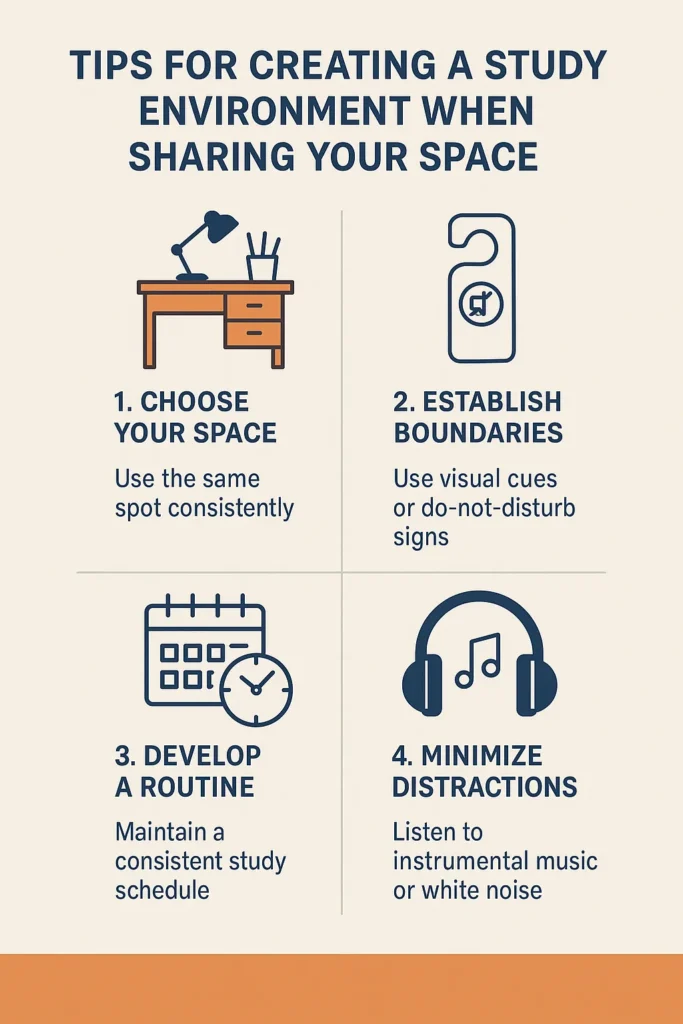
Find a consistent location—a corner, a windowside table, even a hallway nook. Keep it clean, well-lit, and free from distractions.
Use vertical space creatively: shelves, wall organizers, and mounted lamps can transform tight quarters into functional hubs.
But what really matters is your brain’s association with that space. When you sit down there consistently to study, you train your mind to switch into focus mode faster.
It’s classical conditioning, like putting on gym shoes and feeling ready to run.
Even placing a small plant, an inspirational quote, or a familiar mug in the space can enhance that cognitive link between place and purpose.
Also Read: The Feynman Technique: Learn Anything Faster by Teaching It
Sensory Anchors: Subtle Yet Powerful Tools
While soundproofing a shared space may be unrealistic, using sensory cues is an effective workaround.
Lighting a specific candle, wearing blue-light glasses, or putting on a particular hoodie can all signal that it’s time to study.
For sound, instrumental playlists or apps like Noisli help drown out distracting background chatter.
If you’re frequently interrupted by meetings or roommates, noise-canceling headphones are a worthwhile investment.
Scent also has surprising influence. Lavender reduces anxiety, while peppermint increases alertness, according to a 2023 study published in Frontiers in Psychology.
A subtle essential oil diffuser can shift the energy of your environment without disturbing others.
+ How Much Should You Really Spend on Rent? A Rule-by-Income Approach
Schedule Smartly Around Shared Rhythms
Rather than fighting the household flow, work with it. Observe when your space is naturally quieter—early mornings, mid-afternoons, or late nights—and schedule your deep work during those windows.
Discuss your study goals openly with those you live with. This doesn’t have to be a dramatic conversation.
A calm, clear message like “I’ll be working on my capstone project from 8–10 a.m. each day” is enough to set respectful boundaries.
You might also create a shared calendar or quiet hours’ agreement, especially if you’re living with peers or roommates.
These proactive steps reduce friction, eliminate guesswork, and make room for mutual consideration.
The Role of Technology: Friend or Foe?
We live in an age where digital distractions are always one tap away—but technology can also enhance your concentration when used with intent.
Apps like Brain.fm offer music engineered through neuroscience to improve attention. Others, like Forest, help you resist the urge to check your phone by growing virtual trees while you stay focused.
Need a real-time boundary? The Krisp app removes background noise from video calls, making it ideal for group study sessions or Zoom classes in bustling homes.
However, tech boundaries matter too. Use browser extensions like Cold Turkey or Freedom to block distracting websites during study sessions.
But remember—discipline, not just digital tools, drives consistency.
Communication Is a Productivity Tool
Many people underestimate how vital communication is to create a study environment when you share your space. It’s not only about finding silence—it’s about setting shared expectations.
For instance, one graduate student in Austin shares a one-bedroom apartment with her partner and uses sticky notes on the fridge with color codes: green for “available,” red for “deep work,” and yellow for “need 10 minutes.”
This playful but effective method reduces tension and aligns schedules without confrontation.
Clear, respectful communication builds trust and collaboration—and prevents passive-aggressive conflicts that drain emotional energy.
Flexibility Over Perfection
Let go of the illusion that your study environment needs to be flawless. Even elite universities have adjusted expectations in response to the realities of remote learners. What matters most is adaptability.
One analogy that helps: studying in a shared space is like learning to dance on a crowded floor. You might get bumped, but you adjust your rhythm, find your space, and keep moving.
This mindset reduces frustration and turns imperfections into opportunities to become more focused, more creative, and more resilient.
Making It Work: Real-Life Practices That Stick
Consider the story of Marcus, a software bootcamp student who shares a studio with a roommate. With only one table between them, they created alternating “study shifts.”
Marcus uses the desk in the mornings; his roommate works there in the afternoons. They reinforce the routine with noise-canceling headphones and a shared Google Calendar.
Meanwhile, Tasha, a mom of two in Atlanta, transformed a coat closet into a study nook with peel-and-stick wallpaper, a fold-down desk, and warm lighting.
She studies there after putting her children to bed—and even calls it her “focus cave.”
These stories aren’t just creative—they’re actionable, showing that intention and flexibility go further than square footage.
Affordable Tools That Boost Productivity
You don’t need to invest heavily to upgrade your environment. A few smart, budget-friendly purchases can help streamline your focus:
| Tool | Benefit | Price Estimate |
|---|---|---|
| Foldable Desk | Mobile study setup | $50–$90 |
| Clip-on Light | Adds focused lighting | $15–$25 |
| Ergonomic Back Pillow | Supports long sessions | $20–$40 |
| Mobile Storage Caddy | Keeps materials organized | $30–$50 |
| Portable Divider Screen | Adds instant privacy | $45–$100 |
When chosen intentionally, even small upgrades send a signal: your learning matters. You’re investing in your growth—even if the space is tight.
Keep It Going: Small Habits That Add Up
Setting up a great environment is only part of the equation. To sustain focus over time, anchor your sessions to rituals.
Start every study period with five deep breaths, a short walk, or reviewing your goals. End each session by clearing your desk and prepping for the next.
These habits build cognitive momentum—and over time, they make studying feel less like a chore and more like a meaningful routine.
For additional science-backed methods on focus and environment design, visit this detailed article from Psychology Today.
Final Thoughts: You’re Not Alone in This
To create a study environment when you share your space is an act of patience, planning, and self-respect.
It’s also a reflection of real-world learning: growth happens not in silence, but in managing complexity.
Every time you sit down to study in a shared space, you’re building not just academic knowledge—but life skills that endure.
Frequently Asked Questions (FAQs)
1. What’s the minimum setup I need to create a study space?
A clean, consistent surface, a good chair, adequate lighting, and noise control (via headphones or app) are enough to start. Add sensory cues and storage as needed.
2. How can I manage my study schedule around others?
Coordinate through calendars or visual signals (e.g., sticky notes). Talk openly about your goals and ask others when they need the space, too. Collaboration beats conflict.
3. What if I get interrupted often?
Use proactive signals like door signs, timers, or sound cues to train others when not to interrupt. Gradually, people respect your time when boundaries are clear and fair.
4. Should I study in my bedroom or elsewhere?
If the bedroom is your only option, use it—but separate your sleep zone from your study zone. Even a small desk facing away from the bed makes a difference.
5. Are shared environments bad for learning?
Not at all. They simply require more planning and communication. In fact, learning to thrive in imperfect spaces builds skills in focus, communication, and discipline.
